- Clipsal extends Iconic range
- Australia’s acoustic sensors market set for solid growth
- Energy storage specialist opens Australian office
- Firmware upgrade for measurement amplifiers
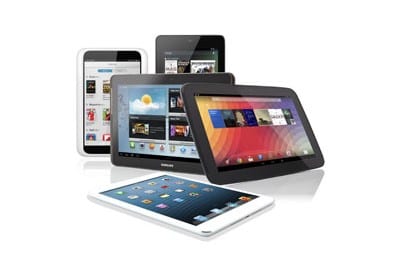
When the iPad was released in April 2010, champions of the form factor said tablets were going to change the landscape of personal computing forever. And they did. For a while. Six years later, and with a plethora of devices available, the tablet market is in decline.
Market research company IDC latest research shows tablet shipments were down 10.1 per cent in 2015 compared to 2014 figures with just under 207 million units shipped. More recent statistics from the company show that for the third quarter of 2016, shipments dropped from 50.5 million to 43 million – a 14.7 per cent drop.
Apple is still the king of tablets with its various iPad iterations having 22 per cent of the market. And despite the exploding battery issue with its Galaxy Note 7, Samsung holds onto second spot with 15 per cent market share.
So why the decline? One theory is that people are moving away from tablets and embracing phablets and smartphones, whose screens are now becoming larger. Why invest $500 or $600 in a tablet, when your smartphone offers a similar experience?
Another reason is that tablets were initially seen as the ultimate portable iMac or PC (depending on the vendor) – a ‘desktop’ PC on the go. Now manufacturers are putting together detachable laptops, whereby the keyboard and screen can be separated, so it can be converted from a laptop to a tablet in seconds. This is borne out by more research carried out by IDC.
Does it mean the end of the tablet? Not in the immediate future. While there are cons for the device, there are pros, too. Some people just like the form factor. People on the move like a computer that is just over 10-inches that fits nicely in a briefcase or bag, and is not intrusive when riding the train or bus. It also helps those on a budget. You have the functionality of a laptop or desktop (albeit not the processing power and other bells and whistles) at an affordable price.
IDC is not predicting when the decline of the tablet will level out, but it does appear that its uses are becoming more streamlined and limited.