- Clipsal extends Iconic range
- Australia’s acoustic sensors market set for solid growth
- Energy storage specialist opens Australian office
- Firmware upgrade for measurement amplifiers
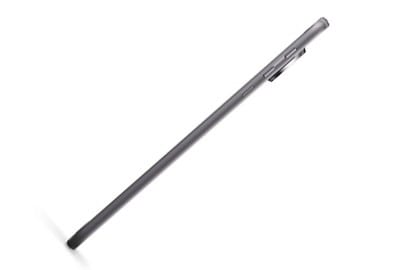
Motorola recently released the world’s thinnest smartphone, the Moto Z. Having gotten his hands on a device at the launch in October, Mike Wheeler wondered how they could fit all the functionality into such a small space without affecting performance. He spoke with Motorola Lenovo’s US-based Australian vice president of engineering, device innovation and architecture, Andrew Wells.
EN: The form factor of the Moto Z is super thin. How did you manage to fit so much under the hood without affecting performance?
Wells: To make the device super thin, the team had to re-think almost every aspect of the design. For example, we had to borrow a new grade of aluminium from the aerospace industry that enabled us to have a thinner and lighter design without compromising device robustness. We also employed a new class of stainless steel for the back of the phone that was both magnetic, and significantly thinner than what has been used in the past.
Our engineers also paid careful attention to how we laid out the printed circuit board to ensure that we placed “tall” parts in locations where they would fit. [We] had to find a way to create a new audio design that would meet the needs of earpiece and multimedia audio without needing two speakers as is typically the case.
In addition, once a device gets to be as thin as the Moto Z, you find that it will quickly overheat when users are executing high-performance tasks, such as playing a game or watching a video. To get around this problem, we designed a liquid cooling system that can quickly distribute heat away from the microprocessor, enabling the device to run faster for longer.
EN: What was sacrificed to fit everything in? I note the battery life is just as good, and the camera seems the norm for a smartphone, so something had to give? What’s missing?
Wells: This is an area our engineers spent a lot of time thinking this through. Even though the 2600mAh battery seems a little on the light side, we were able to optimise the system in a way that ensured that the typical user can get through a typical day of usage. This is done by carefully measuring and optimising the current drain for a broad range of use cases (eg web browsing, phone calls). For each use-case, our engineers go through the EE & SW design to ensure we have can account for, and justify every single mAh of current drain that we’re seeing. In addition, our SW engineers spend a lot of time looking for applications that are drawing more current than they should. When we find such applications, we work internally or with our SW partners to optimize.
For the camera, we are very proud that we were able to hit a DXO score of 85 while keeping the device extremely thin. Apart from carefully selecting the sensor and lens design, our engineers have developed custom algorithms that helped improve speed of focus, speed of capture and quality of our images.
EN: The cynic in me says you made the Moto Mods because you knew that you couldn’t fit everything in the new form factor. What were some of the engineering challenge and how did you resolve them?
Wells: Actually, the reason we made Moto Mods is that there is a long tail of features and functions that many consumers would like to see in a phone. However, it’s impossible for Motorola or any other vendor to meet these needs by creating a single mobile phone. We wanted to solve this problem by creating a new type of smartphone that enables third-party companies to develop Moto Mods that extend or augment the function of the mobile phone without having to build their own mobile phone.
EN: Some pundits believe that one reason the Samsung Galaxy Note 7 had issues was because Samsung tried to cram too much into a small space. Some alleging the battery catching fire was caused by the company compromising the battery componentry. What sort of testing or engineering feats did you accomplish to make sure this type of thing does not happen with the Moto Z?
Wells: Moto has rigorous battery supplier specs and test process to ensure all of our products are safe to use.
EN: Was there anything you wanted to put in the handset that you couldn’t because of space constraints?
Wells: Not at this point in time.