- Energy-efficient power delivery for servers and data centres
- Batteries—quick coatings
- World’s biggest solar and battery project to be built in South Australia
- Report shows 3 million people affected by outages in 2016
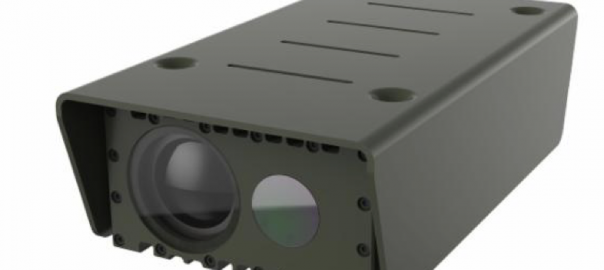
RFEL is offering a new camera sub-system for military vehicle integrators tasked with delivering to the most demanding specification within tight timescales and budgets.
Navigating an unfamiliar terrain safely, in a degraded visual environment, is a common challenge in the modern battlefield. When the field of view is limited and threats are unknown, total command of the road ahead and complete situational awareness are essential for success. Where primary vision is restricted, such as in armoured vehicles operating with hatches down, TRAILBLAZER’s dual-channel daylight and infrared video sensors, along with RFEL’s sophisticated image processing technology, can give the driver, crew and commander views from ahead and behind, in all weathers, day or night.
With front and rear camera units as part of the system, this high performance driver aid uses a high definition sensor and optical package to deliver multiple fields of view from within the total field of regard around the fore and aft install locations. The inclusion of a high quality, long-wave infrared camera channel extends this capability across the thermal scene. A powerful on-board processing package, including RFEL’s Digital Video Fusion algorithm, means that TRAILBLAZER delivers reliable and continuous manoeuvre capability. This includes good threat and obstacle detection, downwards, nearby and far away, and a comfortable view of the route, intuitively tuned to the human operator’s needs
Offering multiple, independent channel outputs on the network interface, TRAILBLAZER can provide video to more than one user on the platform. Each user can command views from front and rear, including wide-angle situational awareness views in addition to driving views and, by exploiting the underlying higher resolution of the raw sensor, a high quality digital zoom capability. This can aid the driver in terrain negotiation and obstacle avoidance, route selection and improve manoeuvrability, whilst other crewmembers can assist with surveillance tasks in parallel to ensure safe and effective operation. This array of data streams need not swamp the platform’s available bandwidth either: output channels can be capped, fixed or shared over the available bandwidth, leaving the integrator fully in control of operating margins and reliability.