- Top 10 sensors market 2017-2022
- Sony batteries for Samsung’s Galaxy 8 smartphone
- Temperature controller has self-contained control system
- Electrical fingerprint technology helps with energy savings
Panasonic Semiconductor Solutions (PSCS) and United Microelectronics Corporation (UMC) have reached an agreement to jointly develop next-generation 40nm Resistive Random Access Memory (ReRAM) technology for mass production.
ReRAM, similar to mainstream flash memory, is a type of non-volatile memory that features a simple structure, high-speed processing and low power consumption.
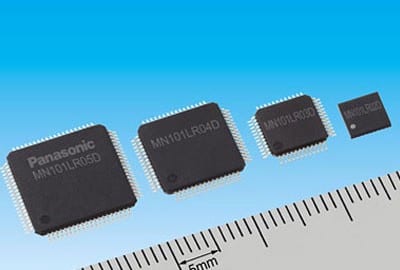
Panasonic first entered mass production for 0.18um ReRAM in 2013 on its MN101LR product series, which were implemented into 8-bit microcontrollers used in low-power applications such as portable medical and healthcare devices. Panasonic then became the first company in its industry to obtain reliability certification on memory arrays for 40nm ReRAM.
The cooperation agreement will enable the integration of PSCS’s 40nm ReRAM with UMC’s world-class CMOS process to achieve a ReRAM technology platform that incorporates embedded memories in place of flash, improving the performance of a wide range of electronics such as those used in IC cards, wearable products and IoT devices.
PSCS is expected to ship product samples based on UMC’s 40nm process in 2018. The two companies will offer the co-developed ReRAM process platform to other semiconductor manufacturers and suppliers from around the world.