- Liquid fuel for future computers
- Global standard for street light products
- Panasonic capacitors handle high temperatures
- Plastic electrode stretches like rubber but carries electricity like wires
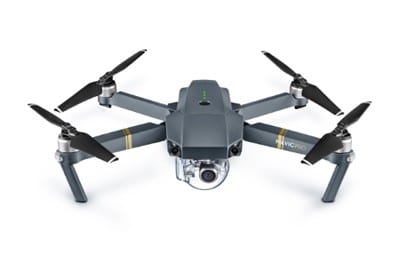
Mavic Pro is made by DJI and is a drone that is small enough to toss in a bag and easy enough to launch quickly whenever the time and place are right. Its folding design compresses entire drone to practically the size of a water bottle.
It is equipped with a stabilized 4K camera and a visual navigation system, with a 4.3 mile (7 km) range and 27 minute flight time, Mavic Pro sets the new standard for compact drones.
With four folding arms and propellers that tuck away against its body, it can be carried in a purse or backpack, saving you the trouble of mounting propellers before a flight. It can be operated by a long range remote controller, or by a smartphone at shorter range. When controlled by a smartphone, the system can be set up and airborne in less than a minute.
FlightAutonomy is Mavic Pro’s brain and nervous system, a network of hardware and software consisting of five cameras, GPS and GLONASS navigation systems, a pair of ultrasonic range finders, redundant sensors and 24 computing cores. FlightAutonomy can position, navigate and plan routes for Mavic Pro, enabling it to avoid obstacles in various environments, with or without the help of satellite signals. FlightAutonomy provides a boost in working range and can cope with complex 3D environments.
The drone can fly for up to 27 minutes. Sport Mode allows speeds of up to 40 mph (64.8 kph), increasing the drone’s agility and responsiveness, claims the manufacturer. Mavic Pro is said to remain stable in winds of up to 24 mph (38.5 kph), and uses DJI’s GEO geofencing system to help identify restricted areas.
As with all DJI drones, Mavic Pro is set to automatically return to its launch location if it ever loses contact with the controller or reaches critically low battery levels. The new Precision Landing feature records a burst of video with two stereo cameras every time Mavic Pro launches.
It is claimed to have the smallest-ever three-axis gimbal for shake-free photos and video. The autofocus camera features a minimum focusing distance of just 19 in (0.5 m) and can be flipped 90 degrees to portrait mode for vertical selfies and video. Mavic Pro records 4K video at 30fps and full 1080p HD at 96fps. Its 12-megapixel camera with Adobe DNG RAW support has been tuned for aerial images. With the help of the high-precision gimbal, you can confidently shoot 2-second-long exposures in the air to get aerial images.
Using just your phone’s touchscreen, you can use TapFly to direct Mavic Pro to go wherever you want, avoiding obstacles along the way. When you want to take a hands-free selfie, FlightAutonomy makes it possible to control the drone with gestures.
An updated version of the manufacturer’s ActiveTrack recognises common subjects such as people, bicyclists, cars, boats and animals.
At the other extreme, the new Tripod Mode is designed for indoor use, slowing and fine-tuning Mavic Pro’s position and angle based on controller movement inputs to allowing for precision framing and safe indoor flight.
Mavic Pro also pairs with DJI’s immersive DJI Goggles, displaying an 85-degree view from the drone in full 1080p for a true bird’s-eye view of the world below. With built-in OcuSync, the goggles receive video directly from Mavic Pro in the air and not through the controller, reducing lag to a minimum – and allowing you to share the in-flight view with a friend.